Are you wondering how to change money and pay in Morocco?
This is one of the most common questions travellers ask before visiting the country. Should you bring cash? Are credit cards widely accepted? Where can you exchange euros, pounds or dollars? Can you use a card in taxis, restaurants and local markets?
The easiest approach is to use a combination of cash and a bank card. Cards are accepted in many hotels, restaurants and larger shops, especially in major cities. However, cash is still essential for taxis, traditional markets, small cafés, rural areas and everyday purchases.
This practical guide explains how money works in Morocco so that you can travel with confidence and avoid unnecessary fees.
What Is the Currency of Morocco?
The official currency of Morocco is the Moroccan dirham. Its international currency code is MAD, although prices may also be written as:
- DH
- DHS
- د.م.
The exchange rate changes over time, so it is always a good idea to check the current rate before travelling.
As a simple mental reference, one euro is often worth a little more than ten Moroccan dirhams. However, this is only an approximate calculation and should not be treated as the official exchange rate.
Downloading a currency conversion app before your trip can make it much easier to understand prices during your first days in Morocco.
Should You Use Cash or Card in Morocco?
The best option is to carry both.
Bank cards are useful for paying at:
- Hotels and many riads.
- Larger restaurants.
- Supermarkets.
- Shopping centres.
- Petrol stations.
- Established tour operators.
- Some museums and tourist attractions.
- Modern shops and international businesses.
Cash is usually needed for:
- Taxis.
- Souks and traditional markets.
- Small cafés and local restaurants.
- Street food.
- Tips.
- Small shops.
- Local guides and small service providers.
- Rural villages.
- Public toilets.
- Small purchases and entrance fees.
Visa and Mastercard are the most commonly accepted international cards. American Express may be accepted in some luxury hotels and larger establishments, but it is less widely used.
Even when a business displays a card logo, the payment terminal may not always be working. For this reason, you should never rely entirely on card payments.
Where Can You Exchange Money in Morocco?
You can exchange foreign currency at several authorised locations, including:
- Airports.
- Banks.
- Official currency exchange offices.
- Some hotels.
- Shopping centres.
- Tourist areas in major cities.
Euros, US dollars and British pounds are among the easiest currencies to exchange.
You may be asked to show your passport when exchanging money, so it is a good idea to carry it or check whether a copy will be accepted.
Always use a bank or an official exchange office. Avoid exchanging money with strangers in the street, even if they offer a rate that appears to be better.
Should You Exchange Money at the Airport?
Changing a small amount of money at the airport can be convenient. You may need Moroccan dirhams immediately to pay for:
- A taxi or airport transfer.
- A local SIM card.
- Food or drinks.
- Small purchases.
- Tips.
However, you do not need to exchange your entire travel budget at the airport. A practical strategy is to exchange enough money for your first day and then compare rates at banks or official exchange offices in the city. Before completing the transaction, ask:
“How many Moroccan dirhams will I receive in total?”
You should also check whether a commission or service charge is included. Count the money before leaving the counter and keep the exchange receipt.
Can You Withdraw Money from ATMs in Morocco?
Yes. ATMs are widely available in Moroccan cities and popular tourist destinations. You will usually find cash machines near:
- Banks.
- Airports.
- Train stations.
- Shopping centres.
- Main squares.
- Tourist areas.
- Large supermarkets.
ATMs are common in cities such as Marrakech, Casablanca, Rabat, Fez, Tangier, Agadir and Essaouira. They may be less common in small villages, mountain areas and remote desert regions. Before leaving a major town, make sure you have enough cash for the next part of your journey.
Do Moroccan ATMs Charge Fees?
Your bank may charge you for:
- Withdrawing money abroad.
- Converting Moroccan dirhams into your home currency.
- Using an ATM outside its network.
- Processing an international transaction.
The Moroccan ATM may also apply its own withdrawal fee. Any local fee should normally appear on the screen before you confirm the transaction. Read the information carefully and cancel the operation when the charge seems unusually high.
It is worth asking your bank about international withdrawal and payment fees before travelling. Making one or two reasonable withdrawals is often more economical than withdrawing a small amount every day.
Always Choose Moroccan Dirhams at ATMs
When withdrawing money, the ATM may ask whether you want the transaction to be processed in Moroccan dirhams or in your home currency. Choose Moroccan dirhams — MAD. The same rule applies when paying by card in shops, hotels and restaurants.
You may see a question such as:
- Pay in MAD or EUR?
- Pay in Moroccan dirhams or British pounds?
- Accept the guaranteed exchange rate?
- Continue with currency conversion?
Choosing your home currency allows the ATM or payment provider to perform the conversion. This service is known as Dynamic Currency Conversion, or DCC.
The exchange rate offered through DCC is often less favourable than the rate applied by your bank. Extra fees may also be included.
A simple rule to remember is:
When paying or withdrawing money in Morocco, choose MAD and allow your bank to convert the transaction.
This will not remove any fees charged by your bank, but it can help you avoid an additional and potentially unfavourable conversion.
Can You Pay in Euros, Pounds or Dollars?
Some hotels, tour companies and shops in tourist areas may accept euros, US dollars or British pounds. However, foreign currency is not accepted everywhere, and the business will decide the exchange rate. This can make the final price more expensive than paying in Moroccan dirhams. For everyday expenses, it is easier and clearer to pay in the local currency.
When receiving a price for a tour, transfer, hotel or piece of handicraft, always confirm the currency:
“Is that price in Moroccan dirhams or euros?”
Do not assume that a spoken price refers to one particular currency.
Do Taxis in Morocco Accept Cards?
Most local taxis in Morocco expect payment in cash.
This includes many:
- Petit taxis operating within cities.
- Grand taxis travelling between neighbourhoods or towns.
- Taxis waiting near markets, stations and tourist areas.
Some taxi-booking applications or private transfer companies may allow online or card payments, but this should be confirmed in advance. Before starting the journey, ask for the approximate price or make sure the driver uses the meter when required. Carry small notes so that you can pay the correct amount without needing change from a large banknote.
Are Cards Accepted in Moroccan Souks?
Cash is the normal payment method in traditional Moroccan souks. Some established carpet shops, jewellery stores and larger handicraft businesses accept cards. However, smaller stalls and independent sellers usually prefer cash. Even when card payment is available, ask whether an additional fee will be charged. If you are negotiating a price, make it clear whether you intend to pay in cash or by card before agreeing on the final amount.
Carry Small Notes and Coins
Large banknotes can be difficult to use for a cup of coffee, a short taxi journey or a small tip. Try to keep a mixture of notes and coins for everyday expenses.
Small change is useful for:
- Taxis.
- Tips.
- Toilets.
- Bottled water.
- Snacks.
- Small market purchases.
- Parking attendants.
- Luggage assistance.
You can often obtain smaller notes by paying at a supermarket, restaurant or established shop. Avoid waiting until you enter a taxi or market to discover that you only have a large banknote.
How Much Cash Should You Carry?
There is no single amount that is suitable for every traveller. Your daily cash needs will depend on your destination, accommodation, activities and travel style.
In major cities, you may be able to pay for your hotel and larger meals by card while using cash for taxis and small purchases.
You will need more cash when travelling through:
- Las Montañas del Atlas.
- El desierto del Sahara.
- Small villages.
- Rural markets.
- Remote coastal areas.
- Areas with limited mobile or banking coverage.
Carry enough for the day, but avoid keeping all your money in the same place.
A sensible approach is to keep:
- A small amount in your wallet.
- Additional cash in a secure bag or hotel safe.
- A second card stored separately from your main card.
Keep Your Exchange Receipts
Keep the receipts you receive from banks and official currency exchange offices. They can be useful if you have a significant amount of Moroccan currency left at the end of your trip and want to exchange it back.
Ask an authorised bank or exchange office whether your remaining dirhams can be converted before leaving Morocco. It is usually easier to exchange money gradually during your trip instead of changing a large amount on your first day.
During the final days of your holiday, calculate how much cash you are likely to need so that you do not finish the trip with too many unused dirhams.
Is Contactless Payment Available in Morocco?
Contactless card payments are becoming more common in modern hotels, restaurants, supermarkets and larger shops. However, availability depends on the establishment and whether its terminal is working.
Mobile payments may also be accepted in some businesses, but they should be seen as an additional option rather than your only payment method.
Always carry a physical card and some cash as a backup.
Tips for Using Your Bank Card Safely
Using a card in Morocco is generally straightforward, but a few precautions can make your trip easier:
- Inform your bank that you are travelling, if required.
- Check that international payments and withdrawals are enabled.
- Know your PIN before travelling.
- Keep your main and backup cards separately.
- Use ATMs attached to recognised banks.
- Cover the keypad when entering your PIN.
- Do not accept help from strangers at an ATM.
- Check the amount before approving a card payment.
- Keep receipts for expensive purchases.
- Review your transactions regularly through your banking app.
When an ATM keeps your card or a transaction fails, contact the bank that operates the machine and your card provider as soon as possible.
A Simple Money Plan for Your Morocco Trip
Follow this practical system to make paying in Morocco easier:
- Bring a main bank card and, if possible, a backup card.
- Carry a small amount of foreign currency for emergencies.
- Exchange or withdraw enough Moroccan dirhams for your first day.
- Use cash for taxis, souks, tips and small local businesses.
- Use cards at hotels, larger restaurants and established shops.
- Select MAD whenever an ATM or card terminal offers a currency choice.
- Keep small notes and coins for everyday expenses.
- Check your banking app regularly.
- Keep exchange receipts until the end of your trip.
- Avoid withdrawing or exchanging too much money during your final days.
Frequently Asked Questions About Paying in Morocco
What is the best currency to take to Morocco?
Euros, British pounds and US dollars are generally easy to exchange. The best option often depends on your home country and the fees charged by your bank.
Is it better to exchange money or use an ATM in Morocco?
Both options can be convenient. Compare your bank’s international withdrawal fees with the rate offered by authorised exchange offices.
Can I use my debit card in Morocco?
Most international Visa and Mastercard debit cards can be used at Moroccan ATMs and at businesses that accept card payments. Check with your bank before travelling.
Can I pay by card in Marrakech?
Cards are widely accepted in many hotels, riads, restaurants, supermarkets and larger shops in Marrakech. Cash is still necessary for taxis, souks and smaller businesses.
Can I pay by card in the Sahara Desert?
Card acceptance is limited in remote desert areas. Bring enough cash before leaving a larger town such as Marrakech, Ouarzazate, Errachidia or Merzouga.
Should I tip in Moroccan dirhams?
Yes. Tips are normally given in Moroccan dirhams, so keeping coins and small notes is helpful.
Should I choose euros or dirhams when paying by card?
Choose Moroccan dirhams. This usually allows your own bank to perform the currency conversion instead of the merchant’s payment provider.
Final Advice: Combine Cash and Card
Changing money and paying in Morocco is easy once you understand the basics.
Use Moroccan dirhams for taxis, markets, tips and small purchases. Use your card at hotels, established restaurants, supermarkets and larger shops.
Before travelling, check your bank’s international fees and make sure your cards are enabled for overseas use. At ATMs and card terminals, select Moroccan dirhams instead of your home currency.
Most importantly, carry both cash and a bank card. This simple combination will give you the flexibility you need in cities, villages, mountain regions and the desert.
Nuestros Tours Privados a Marruecos más populares
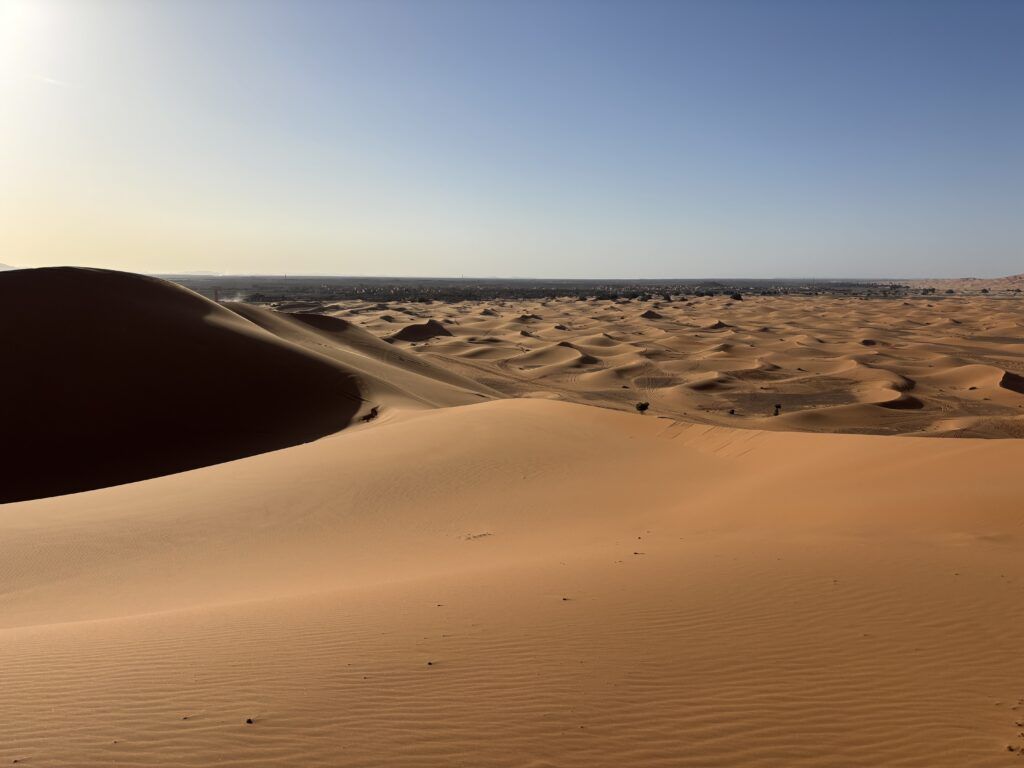
Marrakech al Desierto del Sahara
3 días / 2 noches
Marrakech → Valle del Dades → Merzouga → Marrakech
Tour por el Desierto del Sahara desde Marrakech
5 días / 4 noches
Marrakech → Valle del Dades → Merzouga → Uarzazat → Marrakech
Ir a Marrakech
7 días / 6 noches
Fez → Meknes → Merzouga → Ait Ben Haddou → Uarzazate → Marrakech
Casablanca a Marrakech
10 días 9 noches
Casablanca → Rabat → Chefchaouen → Meknes → Fes → Merzouga → Ouarzazate → Ait Ben Haddou → Marrakech