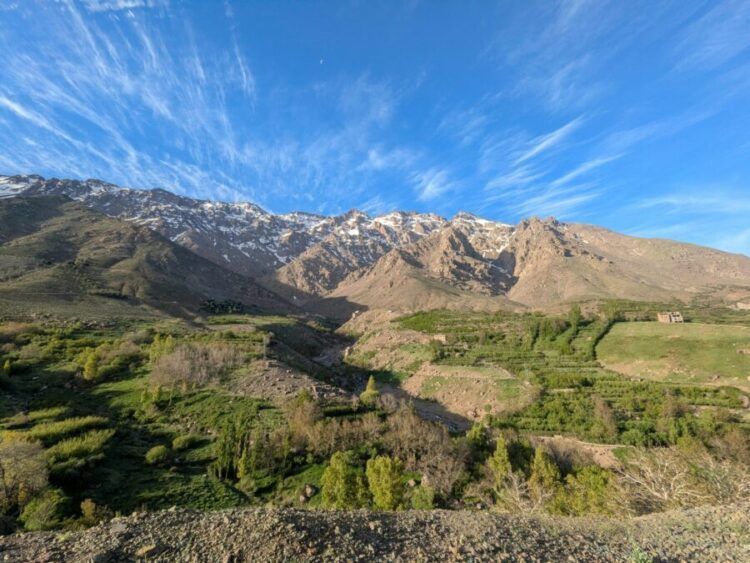
There is a moment when leaving Marrakech that Morocco seems to change completely. This is the High Atlas, one of those places that reminds you that Morocco is far more than medinas, deserts and colourful souks. And you don’t have to be an experienced hiker to enjoy it.
Welcome to the roof of Morocco
Stretching for hundreds of kilometres across the country, the High Atlas is the highest section of the Atlas Mountains and is often described as the “roof of Morocco.” Its most famous summit is Jebel Toubkal, at 4,167 metres, the highest mountain in North Africa.
But the High Atlas is not just about reaching summits. For many travellers, the best memories are found much lower down: walking between mountain villages, sharing mint tea with a local family, watching farmers work on terraced fields or simply stopping beside the road because the view is too beautiful to drive past.
Imlil: where the mountains begin
About the first place many travellers hear about in the High Atlas is Imlil.
Surrounded by mountains, orchards and small Amazigh villages, Imlil is the traditional starting point for treks towards Toubkal. But don’t make the mistake of thinking you should only come here if you plan to climb the mountain.
You can spend a few hours walking through the surrounding villages, follow paths between walnut trees and cultivated terraces, have lunch overlooking the valley or stay overnight and wake up to a completely different side of Morocco.
Ourika Valley: an easy escape from Marrakech
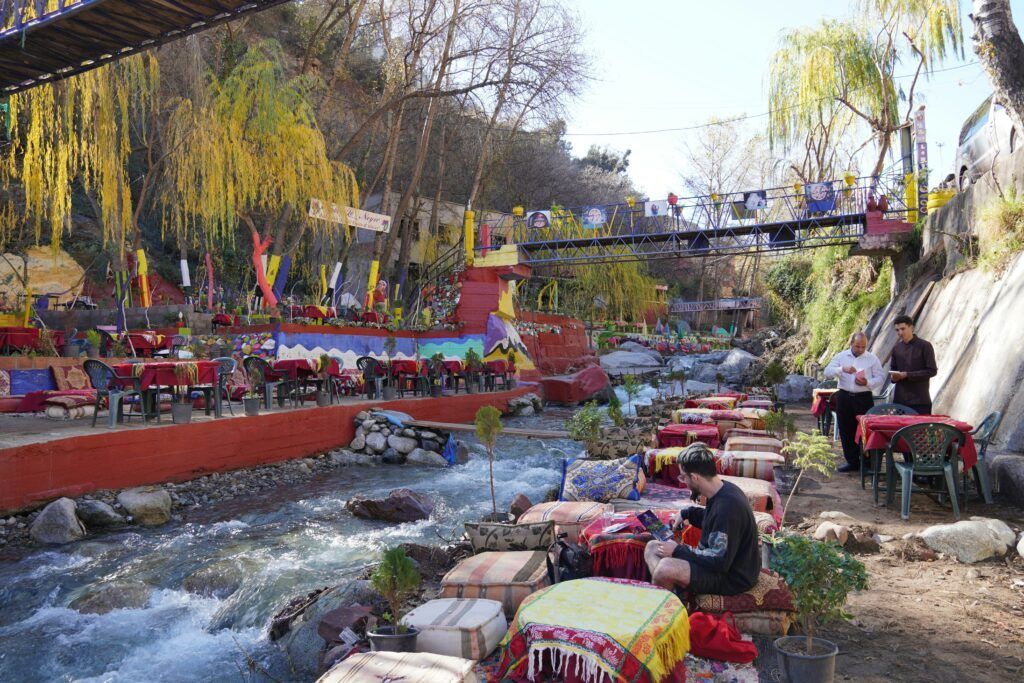
If you don’t have much time, Ourika Valley is one of the easiest ways to experience the High Atlas.
The valley follows the Ourika River into the foothills of the mountains and is known for its green scenery, traditional villages and the waterfalls around Setti Fatma.
It is popular, particularly at weekends, but there is a reason people keep coming.
On a hot Marrakech afternoon, eating a tagine beside the river with your feet almost touching the water feels surprisingly good.
For travellers who want mountains without a demanding trek, Ourika can be the perfect introduction.
Look beyond the most famous valleys
One of the joys of travelling through the High Atlas is discovering that there isn’t just one Atlas experience.
Travel further and you’ll find places such as Aït Bouguemez, sometimes called the Happy Valley. Surrounded by high mountains and traditional villages, it offers a quieter and more rural experience than the areas immediately around Marrakech.
The region around Azilal also opens the door to some spectacular natural landscapes, including Aït Bouguemez, Bin El Ouidane and the Ouzoud waterfalls.
These are the kinds of places where travelling slowly makes sense.
The Amazigh heart of the mountains
The landscapes are spectacular, but the High Atlas would not be the same without the people who live there.
Many mountain communities are Amazigh, the indigenous people of North Africa. Their culture, languages, architecture and traditions remain an essential part of life throughout the Atlas.
You may see villages built from stone and earth that seem almost the same colour as the mountains surrounding them. You may pass small farms, shepherds with their animals or terraces that have been cultivated for generations.
Life in the mountains can appear simple from the outside, but it is important not to romanticise it. These are real communities, not open-air museums.
Do you need to climb Toubkal?
Absolutely not. Toubkal is undoubtedly the most famous mountain in Morocco, and reaching its summit can be an unforgettable experience for hikers who are properly prepared. But the High Atlas has something for almost every kind of traveller.
You can come for a gentle village walk. You can spend a night in the mountains. You can trek for several days. Or you can simply cross the range by road on your way south towards Aït Ben Haddou, Ouarzazate and the Sahara.
Sometimes the best Atlas experience is simply stopping somewhere unexpected, ordering a tea and watching the mountains for half an hour.
Travel doesn’t always need to be complicated.
Every season shows a different Atlas
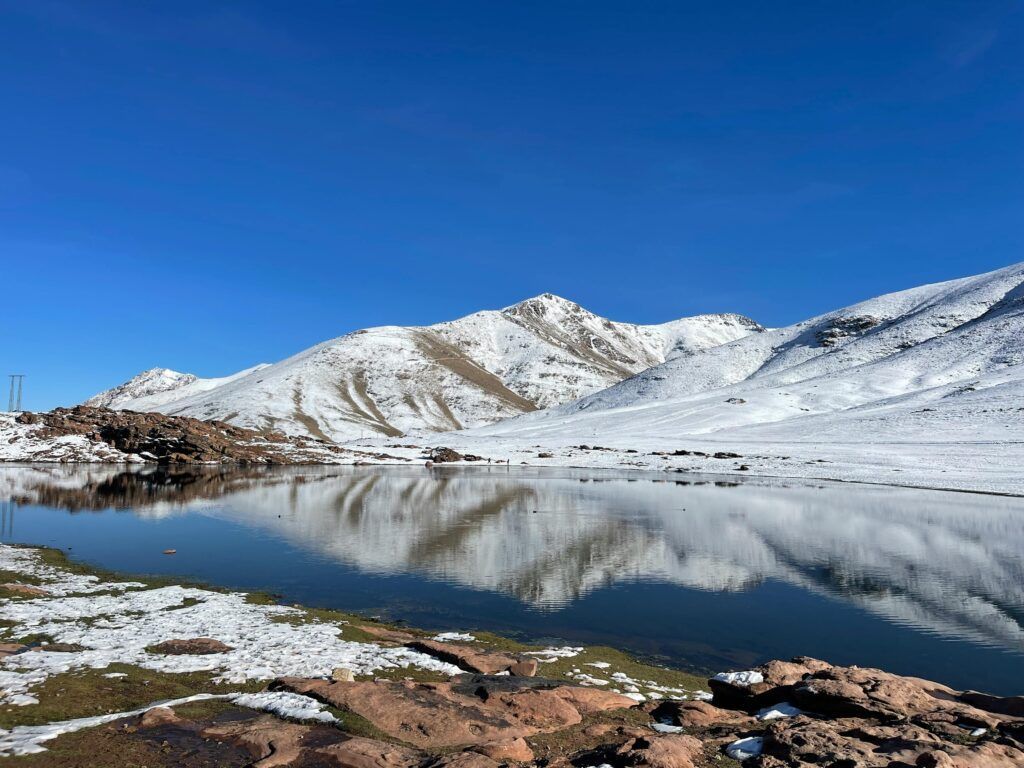
The High Atlas changes considerably throughout the year.
Spring can bring greener valleys and comfortable temperatures for walking. Summer offers clearer access to many higher routes, although the lower valleys can become hot during the middle of the day. Autumn often brings beautiful colours and pleasant trekking conditions.
Winter is another world. Snow can transform the highest parts of the mountains completely, and high-altitude trekking requires appropriate experience and equipment.
Even when Marrakech feels warm, mountain weather can be surprisingly different, so bringing layers is always a good idea.
Why include the High Atlas in your Morocco itinerary?
Because Morocco makes more sense once you’ve crossed its mountains.
Travelling from Marrakech towards southern Morocco, the landscape gradually changes from fertile valleys to dramatic rocky plateaus and eventually to the arid landscapes that lead towards the Sahara.
The High Atlas acts almost like a natural doorway between these different worlds. The range extends for more than 750 kilometres and forms one of Morocco’s great geographical barriers.
After the energy of Marrakech’s medina, the calls of shopkeepers, the motorbikes, the smells of spices and food and the constant movement of the streets, arriving in a quiet Atlas valley can feel almost surreal.
Take your time
If there is one piece of advice I would give anyone travelling through the High Atlas, it is this:
Don’t rush it.
Of course, you can visit the mountains on a day trip. But if your itinerary allows it, spend a little longer.
Morocco’s great imperial cities will impress you. The Sahara will probably be one of the photographs you show everyone when you return home. But the High Atlas often gives travellers something different. It gives you the feeling that, for a little while, you have left the itinerary behind. And sometimes those are the moments you remember most.
Discover the High Atlas with a local guide
Whether you want to explore traditional mountain villages, walk through beautiful valleys or cross the High Atlas on your journey from Marrakech towards the Sahara, travelling with a local guide allows you to discover places and stories that are easy to miss when travelling alone.